
Grace Kelly
The epitome of elegance, sophistication, and timeless beauty—cool charm with subtle intensity.

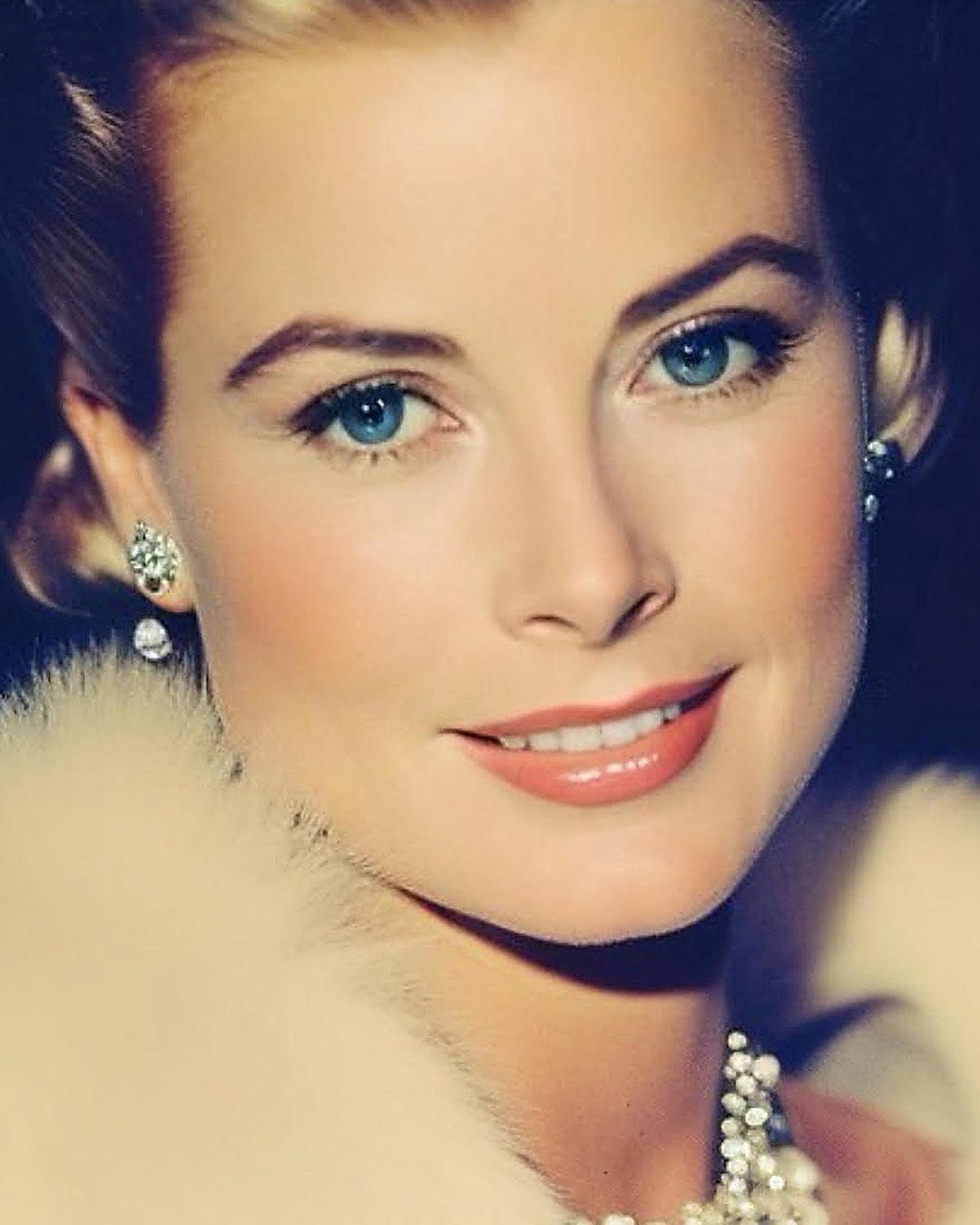
Some stars light up a room.
Others command it.
Grace Kelly didn’t sparkle. She defined the frame.
She entered a scene the way a pianist enters a concert hall—without hurry, without apology. The room adjusted to her.
Born in 1929, Grace Kelly rose with astonishing speed in the early 1950s, becoming Alfred Hitchcock’s most luminous muse and Hollywood’s most improbable force. She wasn’t loud. She wasn’t theatrical. She didn’t perform desire—she contained it. And in that restraint, she became irresistible.
This is the next post in the series: Hollywood Legends as photographed by LIFE Magazine.
Kelly’s power was never decorative. It was architectural.
She was built of lines and pauses.
Of stillness that felt like tension.
Of poise that felt like control.
In an era dominated by bombshells and bravado, Grace Kelly offered something radical: composure. Her characters didn’t beg to be seen. They waited. They didn’t plead. They decided.
Hollywood hadn’t seen that kind of woman.
Where others projected heat, Kelly projected gravity.
Where others filled the frame, she defined it.
And LIFE understood immediately.
When LIFE placed Grace Kelly on its cover, it wasn’t simply celebrating beauty. It was marking a shift in what power could look like. The camera didn’t chase her. It deferred.
Her covers don’t feel nostalgic.
They feel eternal.
She doesn’t pose.
She is.
And then she did something no Hollywood myth had ever done before.
She left.
At the height of her fame—an Academy Award winner, Hitchcock’s favorite, one of the most photographed women in the world—Grace Kelly walked away from the dream factory to become Princess of Monaco.
It wasn’t escape.
It was authorship.
She didn’t vanish into fantasy.
She stepped into history.
Grace Kelly didn’t just play queens.
She became one.
Grace Kelly on the Cover of LIFE
Four covers. Four eras.
From rising star to global icon to royal figure—LIFE followed her not because she changed, but because the world did around her.
She wasn’t just a movie star.
She was a standard.


Ten Things You Might Not Know About Grace Kelly
She won the Academy Award for The Country Girl (1954), beating out Judy Garland in A Star Is Born.
Alfred Hitchcock cast her in three of his most iconic films, calling her “a snow-covered volcano.”
She was intensely shy off-camera and often uncomfortable with celebrity.
Her wardrobe in Rear Window is still studied in fashion schools today.
She met Prince Rainier of Monaco during a Cannes Film Festival photo shoot arranged by Paris Match.
Her wedding was broadcast to over 30 million people worldwide—one of the first truly global media events.
After becoming Princess of Monaco, she never returned to film, despite repeated offers.
Her personal style helped define what we now call “timeless elegance.”
She transformed Monaco from a sleepy principality into an international cultural destination.
She proved that power doesn’t have to announce itself. Sometimes, it simply arrives.
Grace Kelly didn’t chase legend.
She became it.
This work exists solely because of reader support. Please subscribe.
The perfect milestone gift—
Original LIFE Magazines are real, original issues from 1936–2000. History you can hold.
Buy now at OriginalLIFEmagazines.com.